Creating a stunning outdoor area starts long before the first stone is laid. If you’ve ever walked across a stone path that felt like a seesaw, you’ve seen what happens when the foundation is ignored. Professionals know that the longevity of patios.com.au’>patios depends almost entirely on the quality of the base. It isn’t just about digging a hole; it’s about engineering a drainage system that’ll withstand the harsh Australian sun and the occasional torrential downpour.
When you’re aiming for a finish that looks like it belongs in a high-end magazine, you’ve got to think like a tradie. That means prioritising structural integrity over aesthetics in the early stages. If the base is solid, the rest of the job is a breeze.
Planning & Excavation
Before you even pick up a shovel, you’ve got to mark out the area. Professionals use stakes and string lines to ensure everything is square and level. You’ll also need to account for a slight fall — usually about 1:80 — to make sure water runs away from your home’s foundations.
Once the area is marked, the real work begins with excavation. You aren’t just clearing the grass; you’re digging deep enough to accommodate several layers of material. Here’s what you need to keep in mind during this stage:
- Soil type: If you’re dealing with heavy clay, you’ll need to dig deeper than if you’re working with sandy soil.
- Depth: Usually, you’re looking at a total depth of about 150mm to 200mm to allow for the road base, sand and the pavers themselves.
- Clearance: Ensure all roots, debris and large rocks are removed so they don’t cause shifting later on.
Setting the Sub-Base
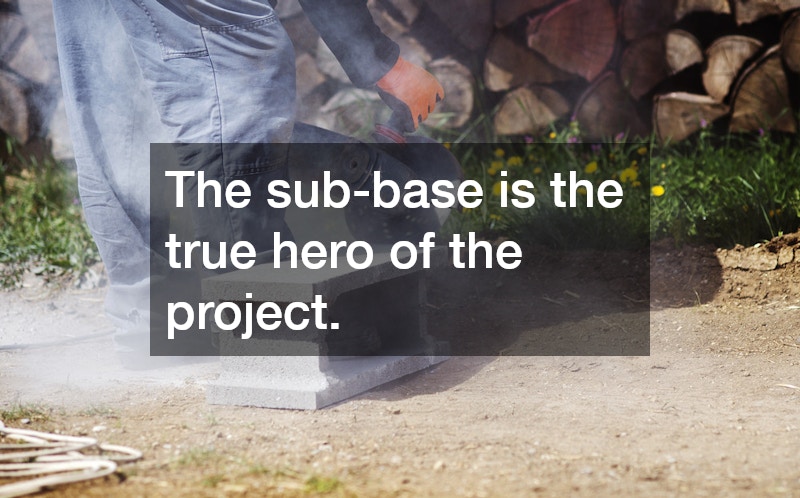
The sub-base is the true hero of the project. Most pros use a “road base” or “crushed rock” which is a mix of fine and coarse aggregates. This material packs down tightly but still allows for minor movements without cracking the surface.
You can’t just throw the gravel in and hope for the best. It’s got to be spread in “lifts” — usually about 50mm to 75mm at a time. Each layer must be thoroughly compacted using a plate compactor (or “wacker packer”). If you don’t compact it properly, the ground’ll eventually settle, leading to those unsightly dips and puddles often seen in DIY patios.
Don’t forget to give the sub-base a light spray with a hose while compacting. A bit of moisture helps the particles slide into place, creating a much denser and more stable foundation.
The Importance of the Bedding Sand
Once the sub-base is rock hard and perfectly sloped, it’s time for the bedding sand. This layer shouldn’t be too thick — usually around 30mm is the sweet spot. Professionals use washed river sand or paving sand because it doesn’t wash away easily and provides a stable bed for the pavers.
To get this perfectly flat, you’ll need screed rails. These are long, straight pieces of timber or metal laid on the sub-base. You pour the sand over them and then pull a straight edge across the rails to create a smooth, even surface.
- No walking: Once the sand is screeded, don’t step on it! Any footprint will create a soft spot that causes a paver to sink.
- Consistency: Keep the sand damp so it holds its shape while you’re working.
- Quality: Avoid using yellow brickies sand, as it contains too much clay and won’t drain as well as sharp sand.
Laying the Pavers & Finishing Touches
With the bed prepared, you can finally start laying your stone. Start from a straight edge or a corner and work your way outwards. It’s best to stay on top of the pavers you’ve already laid rather than kneeling on the fresh sand. Professionals use a rubber mallet to gently tap each stone into place, ensuring it’s level with its neighbours.
After the pavers are down, you’ll need to lock them in. This is done by sweeping fine “gap sand” or kiln-dried sand into the joints. This creates friction between the stones, which stops them from shifting horizontally.
Finally, you’ll want to run the plate compactor over the finished surface one last time. Use a piece of old carpet or a rubber mat under the compactor to avoid scratching your beautiful new stone. This final vibration settles the pavers into the bedding sand and forces the gap sand deep into the joints.
Why the Base Matters for Patios
At the end of the day, skipping steps in the foundation is a recipe for disaster. Well-constructed patios can last for decades, providing a perfect spot for weekend barbeques and evening drinks. If you put in the hard yards during the excavation and compaction phases, you’ll have a flat, stable and professional-looking finish that’ll be the envy of the street.